

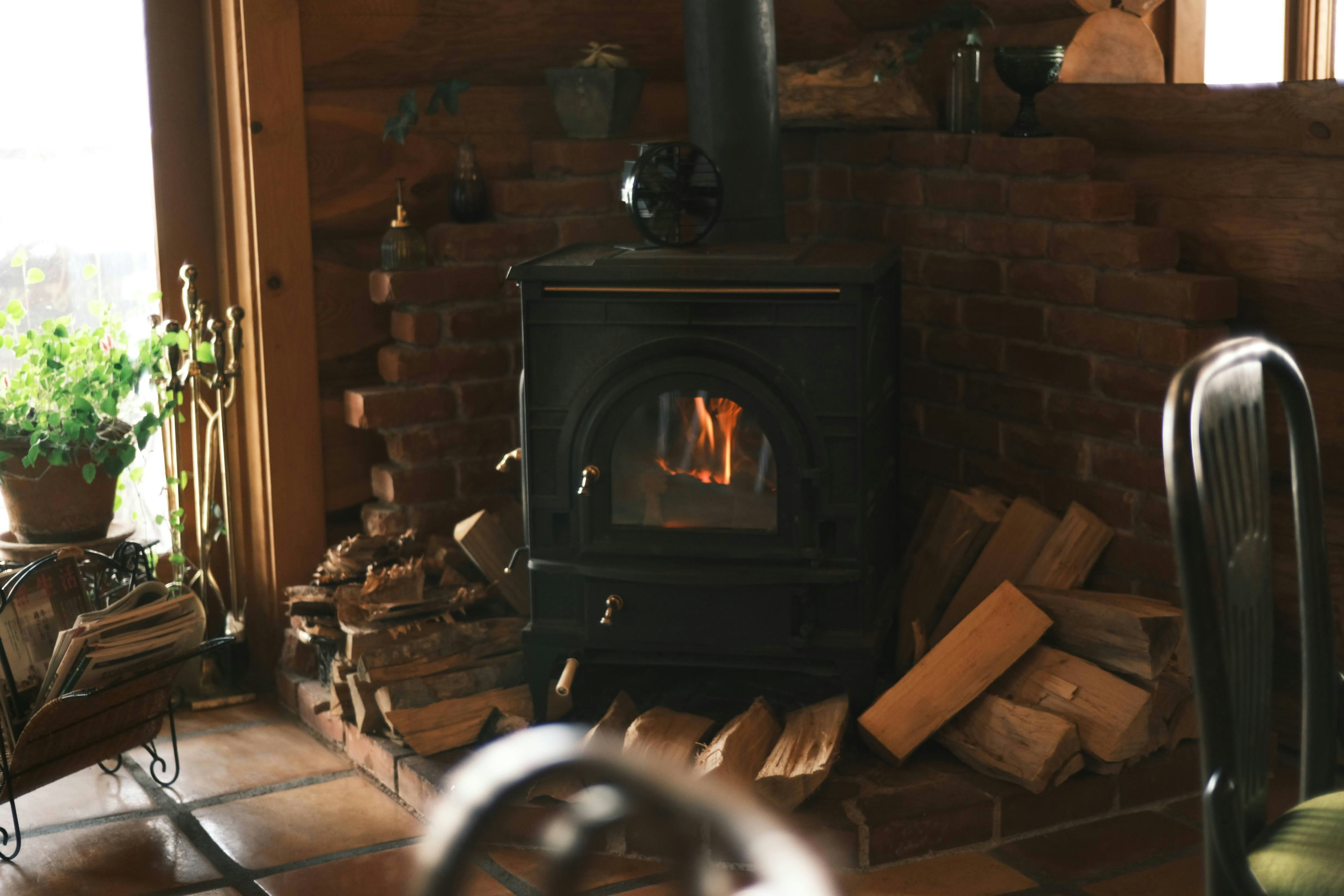
There’s a certain point every autumn when the evenings draw in and the house feels that bit colder than it did a week ago. It’s usually the moment people start thinking seriously about how they heat the main living space. A stove is one of the best answers, and for most homes the real choice comes down to two options: a wood pellet stove or a multi-fuel stove.
Both burn real fuel and throw out proper, comforting heat, but they suit different homes, budgets and routines. At Stakelums it’s one of the questions we get asked most as the cold sets in, so here’s a straight answer to what people want to know, helping you shortlist with confidence before you browse the full range of stoves and fires.
What is a wood pellet stove?

A wood pellet stove burns small compressed pellets made from recycled sawdust and wood waste. The pellets sit in a hopper and feed into the burn chamber automatically at the rate you set, so you can run the stove on a thermostat and a timer and come down to a warm room without touching a match. A full hopper can keep things going for well over a day before it needs topping up.
Because they burn a uniform fuel at a controlled rate, pellet stoves are the most efficient option in the category, often around 85 to 90%, and they burn cleanly with fewer particulates. They do need a small amount of electricity for the auger and fan, and a flue, though usually a more compact one than a full chimney.
Pros
- Very efficient and economical to run
- Automatic feed, thermostat and timer control
- Steady, consistent heat all evening
- Cleaner burning with lower emissions
- Compact flue, no full chimney needed
Cons
- Higher upfront cost
- Needs electricity, so no heat in a power cut
- A gentle fan hum rather than a crackling fire
- Pellets need dry storage
What is a multi-fuel stove?

A multi-fuel stove is the traditional favourite, built with a grate and an ash pan so it can burn a range of fuels that means seasoned timber, peat briquettes and approved smokeless solid fuels, so you can choose your fuel on price and availability, which is especially handy in rural homes. You get a living flame, strong radiant heat and that classic cast iron look as the focal point of the room.
A multi-fuel stove needs a suitable chimney or a twin wall flue, and it asks more of you day to day: buying, storing and carrying fuel, lighting the fire and clearing the ash. It works with no electricity at all, so it keeps you warm through a power cut. Look for an Ecodesign model, since every new stove sold in Ireland must now meet these cleaner burning standards, and brands like Henley Stoves and Waterford Stanley build to them as standard. Modern Ecodesign multi-fuel stoves run around 75 to 80% efficient.
Pros
- Burns wood, peat briquettes and smokeless fuels
- Works with no electricity, ideal for power cuts
- Traditional look and the crackle of a real fire
- Lower upfront cost
- Fuel flexibility to suit price and supply
Cons
- More hands on: fuel, lighting and ash to manage
- Slightly lower efficiency than a pellet stove
- Needs a chimney or twin wall flue
- Heat and burn time vary with the fuel you use4
| Wood pellet stove | Multi-fuel stove | |
|---|---|---|
| Fuel | Compressed wood pellets | Wood, peat briquettes, smokeless fuels |
| Effort | Automatic feed, very low | Hands on: load, light, clean |
| Efficiency | Around 85 to 90% | Around 75 to 80% |
| Heat control | Thermostat and timer | Manual, varies with fuel |
| Works in a power cut | No, needs electricity | Yes |
| Flue | Compact flue | Chimney or twin wall flue |
| Best for | Convenience and low running costs | Tradition, flexibility and lower upfront cost |
Which is affordable to run, a pellet or multi-fuel stove?

Both work out far cheaper than heating a room with electricity, so the real contest is between the two of them. A wood pellet stove usually has the edge on pure efficiency, while a multi-fuel stove can win out if you have a cheap or free supply of seasoned timber. In practice, a handful of things decide what you actually spend, and it helps to have a model in mind for each:
- A pellet stove at around 85 to 90% wrings more heat from its fuel than a multi-fuel stove at 75 to 80% for high efficiency with automatic control, the Waterford Stanley Solis K100 Pellet Stove is a popular A rated choice.
- Buy your pellets or solid fuel before the coldest months, when prices are usually at their lowest.
- Damp wood wastes heat and dirties the glass, so well seasoned timber makes a real difference.
- A correctly sized stove runs economically, while one left to idle or pushed too hard burns through fuel for an average sitting room, a compact model like the Henley Stoves Arklow Eco 4.6kW Multifuel is ideal value.
- A pellet stove’s thermostat and timer make steady, efficient heat easy, and a multi-fuel stove rewards careful damping down. A slimline pellet option such as the Elcofire Kiva Pellet Stove 8kW is an affordable way into that control.
- A pellet stove draws a small amount of power for its fan and auger, modest but not quite zero.
If you want the fire to earn its keep across the whole house, a boiler model like the Henley Stoves Sherwood Eco Boiler Stove 12kW heats your radiators and hot water as well as the room, spreading the value further.
Which is the best stove for a first time home buyer?

Setting up your first home is all about getting the essentials right without overspending, and a stove is a great early addition to the main living space which type suits you comes down to a few practical questions:
- If keeping the bills down matters most while you settle in, a pellet stove’s 85 to 90% efficiency and automatic control are hard to beat. The Elcofire Kiva Pellet Stove 8kW is an affordable, efficient place to start.
- A multi-fuel stove costs less to buy, so it’s gentler on the budget after a deposit. If your home already has a fireplace opening, an insert model like the Waterford Stanley Solis I500 Multifuel Stove 5kW slots straight in.
- A working chimney suits a multi-fuel stove, while a pellet stove only needs a compact flue, which is handy in a newer build.
- Pellet stoves are set and forget with a thermostat and timer, ideal if you’re out at work all day, while a multi-fuel stove asks for more hands on time but rewards you with a traditional fire. A newer house with a good BER often needs only a modest output, so you won’t pay for heat you never use.
In short, choose a pellet stove for efficiency and convenience, and a multi-fuel stove for flexibility, character and a lower starting price. A multi-fuel stove even works with the power out, which is reassuring in your first winter.
Choosing between a pellet and a multi-fuel stove is one of those decisions worth getting right first time. If you’re unsure about output, flue requirements or which fuel suits your home, our team is happy to guide you. You can talk to our experts in store or over the phone, and spread the cost with humm finance if that suits your budget. When you’re ready, order online with delivery or free click and collect, or call into the Thurles showroom to see the flames in person before you decide.
Frequently asked questions
1. Do wood pellet stoves need electricity?
Yes. A pellet stove uses a small amount of electricity to run the auger that feeds the pellets and the fan that circulates the heat, so it won’t work during a power cut.
2. Can a multi-fuel stove be used in a power cut?
Yes. A multi-fuel stove burns solid fuel with no electricity at all, which makes it a reliable source of heat when the power is out.
3. Which stove is more energy efficient?
A wood pellet stove is usually more efficient, often around 85 to 90%, compared with roughly 75 to 80% for a modern Ecodesign multi-fuel stove.
4. Do I need a chimney for a pellet stove?
Not a traditional chimney. A pellet stove vents through a compact flue, while a multi-fuel stove needs a chimney or a twin wall flue system.
5. What can I burn in a multi-fuel stove?
Seasoned wood, peat briquettes and approved smokeless fuels. Always use dry, well seasoned timber, since damp wood wastes heat and dirties the glass.
6. Can these stoves heat my whole house?
Yes, if you choose a boiler model. Boiler versions of both pellet and multi-fuel stoves can heat your radiators and hot water as well as the room.