

The best garden power tools depend on your garden and workload: battery tools like EGO and Husqvarna suit most Irish homes for their quiet, low-maintenance convenience, while petrol tools are more suitable for large plots and heavy-duty jobs. Caring for them is simple clean after use, keep blades sharp, store dry, and service petrol engines yearly.
The right garden power tools turn a weekend of hard graft into an easy afternoon but with petrol and battery options and big-name brands all promising to be the best, choosing what suits your garden can feel overwhelming.
Below, we cover how to choose between petrol and battery, what each brand does best, which tool you need for which job, and just as importantly how to look after your equipment so it lasts for years. Everything mentioned is available at Stakelums Home & Hardware, with free click & collect and nationwide delivery.
Petrol vs Battery Garden Tools: Which Should You Buy?
Battery tools suit most Irish homes and small-to-medium gardens thanks to their low noise, zero fumes and near-zero maintenance. Petrol still wins for larger plots, heavy-duty jobs and all-day use where raw power and long runtimes matter most.
Here’s how the two stack up across the things that actually matter:
| Feature | Battery (Cordless) | Petrol |
|---|---|---|
| Best for | Small–medium gardens, regular use | Large gardens, heavy/professional use |
| Power | Excellent for most tasks; improving fast | Highest for dense growth & big timber |
| Runtime | Limited by battery (buy a spare) | Runs as long as there’s fuel |
| Noise | Quiet: Good for early mornings & neighbours | Loud: Ear protection recommended |
| Emissions | Zero at point of use | Exhaust fumes |
| Maintenance | Low: oil/lubricants, air intake, chains & blades | Regular: oil/lubricants, filters, spark plugs, fuel, chains & blades |
| Starting | Instant push-button | Pull-cord / choke priming |
| Weight | Lighter (battery on board) | Heavier |
| Upfront cost | Higher for tool + battery | Often lower for the bare tool |
| Running cost | Very low (recharging) | Ongoing fuel & servicing |

How Do You Choose Battery Garden Tools?
Battery (cordless) tools are the right choice for most Irish gardens. Go battery if you:
- Have a small or medium garden
- Value quiet, fume-free operation
- Want grab-and-go convenience with minimal upkeep
- Already own tools in a battery platform (share one battery across many tools)
The big advantage is the platform: buy into a battery system once and add tools that share the same battery over time. The EGO Powerload Trimmer is a great starting point, coming with a 2.5Ah battery and charger you can reuse across the EGO. Browse all Battery Products to build your kit.
How Do You Choose Petrol Garden Tools?

Petrol tools deliver the most power and longest runtimes, making them ideal for bigger, tougher jobs. Go with petrol garden power tools if you:
- Manage a large garden, paddock, orchard or acreage
- Need to cut thick brush, heavy hedges or large trees
- Work for long, uninterrupted stretches
- Want maximum power for demanding all-day jobs
For cutting and felling, a Husqvarna chainsaw scales to your workload the Husqvarna 135 for homeowner tasks, up to the Husqvarna 450 for heavier work. For outdoor cleaning the Karcher range of power washers are hard to beat and for professional grade power the Honda 13HP Petrol Pressure Washer is perfect. See the full Garden Tools & Machinery range.
Modern battery platforms like EGO and Husqvarna now rival petrol on many tasks, and one battery can power a whole family of tools trimmer, blower, hedge trimmer and mower. For most homeowners, that convenience is the deciding factor.
What Are Garden Power Tools Used For?

Garden power tools make heavy garden work quicker and easier. Here’s what the main ones do:
- Lawnmower – Cuts grass evenly. Choose a walk-behind, a ride-on or a hands-free robotic mower to suit your garden.
- Strimmer / Brush Cutter – Trims edges and long grass a mower can’t reach; brush cutters handle dense weeds, the EGO Powerload Trimmer is a great cordless option.
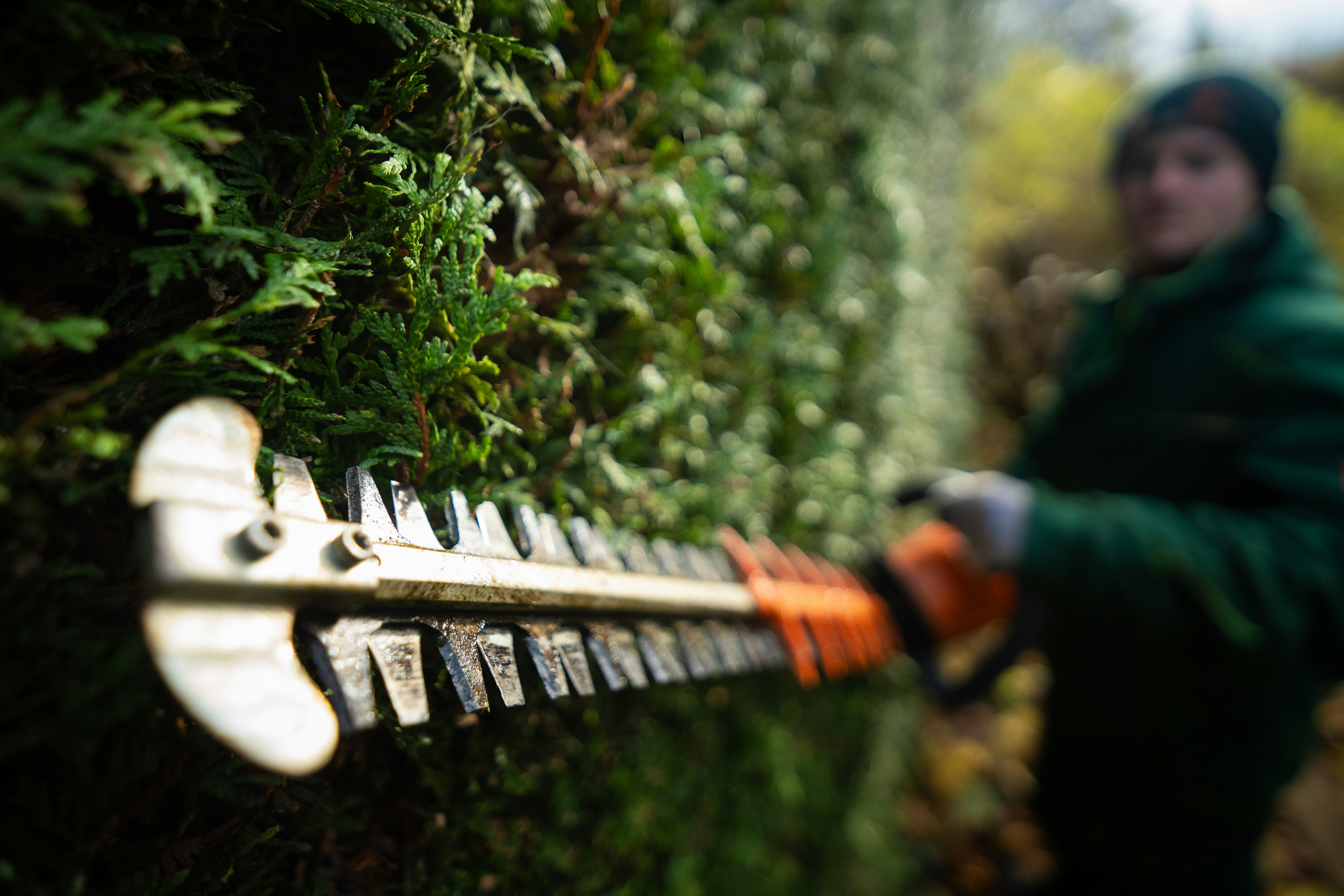
- Hedge Trimmer – Shapes hedges and shrubs, like the Husqvarna 122HD.
- Chainsaw – Felling and cutting logs, from the light Husqvarna 135 to the powerful Husqvarna 365. model
- Pole Saw – Reaches high branches with your feet on the ground.
- Leaf Blower – Clears leaves and debris from paths and patios.
- Cultivator – Turns and prepares soil for planting.
- Pressure Washer – Deep-cleans patios, decking and furniture, here’s how to power wash your patio properly.
Building a battery kit? Start with Battery Products and add tools that share the same battery over time.
How to Care for Your Gardening Equipment?
Looking after your tools is the single biggest factor in how long they last and how well they perform.
Good news: most of it takes minutes.
General care (all tools)
- Clean after every use. Wipe off grass, sap, mud and debris before it dries on. Clean cutting decks, blades and air vents.
- Keep blades edged. Sharp mower blades, hedge trimmers and chainsaws cut cleanly, work faster and strain the motor less. Dull blades tear grass and leave it prone to disease.
- Check fixings. Tighten any loose nuts, bolts and handles before they cause damage.
- Store dry. Damp is the enemy of meta causing rust corrosion. Keep tools in a dry shed or garage, ideally off the floor.
Caring for battery tools
- Don’t fully drain or overheat batteries. Lithium batteries last longest when topped up rather than run to empty.
- Check and top up lubricants but don’t overfill, ¾ full works best.
- Store batteries indoors at room temperature over winter, roughly half-charged never in a freezing shed.
- Keep battery contacts clean and dry and use only the manufacturer’s charger.
- Remove the battery before cleaning or storing the tool.
Caring for petrol tools
- Check and top up lubricants but don’t overfill, ¾ full works best. Change the oil as per the manual as clean oil is vital for a longer engine life.
- Clean or replace air filters and spark plugs regularly for easy starting and smooth running.
- Don’t leave old fuel sitting. Stale petrol gums up carburettors either drain the tank before long storage or use a fuel stabiliser.
- Service annually. A pre-season service keeps petrol machinery reliable. Contact Stakelums Garden Machinery & Tool Hire Centre to talk to a member of staff for advice and services.
Seasonal & storage tips
- Before winter: clean everything down, sharpen blades, drain or stabilise fuel, bring batteries indoors, and apply a light oil to metal parts to prevent rust.
- Before spring: check blades and lines, charge batteries, top up oil and test-run before the season kicks off.
- Protect your investment with the right garden tool accessories, covers and protective clothing and accessories.
Ready to Kit Out Your Garden? Whether you want cordless convenience, petrol power or a hands-free robotic mower, Stakelums has the range and the expert advice to help you choose. Browse the full Garden Tools & Machinery range online, with free click & collect and nationwide delivery.
Frequently Asked Question
- Are battery garden tools as good as petrol?
For most home gardens, yes. Modern 56V battery platforms from EGO and Husqvarna match petrol on trimming, hedge-cutting and mowing, while being quieter with less maintenance. Petrol still leads for the largest gardens and heaviest all-day jobs.
- What’s the difference between a strimmer and a brush cutter?
A strimmer uses a nylon line to neaten edges and light grass, while a brush cutter uses a metal blade for dense weeds, brambles and saplings. For most gardens a strimmer is enough; choose a brush cutter for rough, overgrown ground.
- How do I keep my garden power tools in good condition?
Clean off grass and debris after every use, keep blades sharp, and store tools dry. For petrol tools, change the oil and service yearly; for battery tools, store batteries indoors and half-charged over winter.
- Can I leave garden tools outside?
Store tools in a dry shed or garage, ideally off the floor, and always bring batteries indoors over winter. If space is tight, a weatherproof cover offers some protection, but dry indoor storage is always best.